Parts of a House. Housing Estate. Kinds of Dwellings
Showing posts with label Blended Learning. Show all posts
Showing posts with label Blended Learning. Show all posts
Tuesday, 31 October 2023
Thursday, 18 May 2023
University - Quizlet
Quizlet Vocabulary Cards (Unit 4 University Yanson V. A Practical Guide for Learners of English)
1. University Mind Map (p.128)
2. Phrases and Word Combinations p.129
3. Mary's Life at the University
Sunday, 8 November 2020
Computer Vocabulary - заняття з використанням Quizlet та Liveworksheets
Step 1 - Введення нових ЛО та їх первинне закріплення
Ми розпочинаємо новий модуль - "Сучасні інформаційні технології". Перше заняття присвячене опрацюванню нової лексики і в цьому нам допоможе сервіс Quizlet. Перегляньте відео як у ньому працювати.
Порядок роботи:1. Прочитайте слова на картках та їх переклад, запишіть до словника.
2. Попрацюйте в режимах Заучивание та Письмо. За бажанням можна пограти в ігри.
3. Виконайте тест та зробіть скріншот результату (відсоток правильних відповідей).
Картки для опрацювання:
Step 2 - Тренування вживання ЛО та контроль їх засвоєння.
Виконайте завдання у сервісі Liveworksheets. Після натискання кнопки Finish виберіть "Email my answers to my teacher", вкажіть своє прізвище, ім'я, групу та мою адресу natalia.zavgorodnyaja@gmail.com
Computer Vocabulary, an interactive worksheet by mireiafores
liveworksheets.com
liveworksheets.com
Tuesday, 6 October 2020
Seasons and Weather Vocabulary Practice - Task on Twitter
1. Watch the video and sing the song. Practise the movements. Copy the lyrics into your copybook or vocabulary.
2. Do Exercises 1-4 on p.76-77 (Speak English with pleasure by Tuchina). Write the answers into your copybooks.
3. Weather is always an interesting topic for conversation and not only in Britain where it's extremely changeable. Weather influences our mood, plans and even health condition. You have been enriching your weather vocabulary and now try to use it on Twitter.
a) Take a photo of your present weather. This can be your view from the window or you can take a picture while having a walk.
b) Post the photo on Twitter with 3 sentences describing the weather in the picture. Use the hashtag #MyQuarantineView You should use some active vocabulary from the exercises on pages 76-77.
c) Make a screenshot of your post and submit. Зробіть скріншот свого твіту та здайте через кнопку Здати роботу.
d) Look through the tweets by your groupmates. Like and retweet. Here is my tweet.
Monday, 23 September 2019
Varieties of the English language. Differences in Vocabulary
One of the consequences of English being a global language is a number of its variations that differ in vocabulary, grammar, pronunciation and spelling (for example, British and American ones). The most famous are the differences in terms and slang some of which are illustrated in this video.
Step-by-step work with the video
1

2

3

4

2. Watch again and complete the chart (there will be 15 words):
№
|
Britain
|
The United States
|
Australia
|
|
1
|
||||
…
|
||||
…
|
||||
15
|
3. Search YouTube and make up the list of interesting videos about differences between "Englishes". I would be delighted to see the links to your lists in the comments.
Friday, 14 June 2019
Homework for Summer
1. Go to BBC Learning English and start a lower-intermediate course. When you finish all the sections, click Open the unit selector button and select the next unit (see the screenshot):


Remember to work systematically. Set the day and the time for your lessons - it's easier if you develop a routine.
2. Register on twitter.com . Subscribe to my account OK English. Pick up 10 more accounts from the list and read your feed regularly. Don't forget to like and retweet the stuff you find interesting.


Remember to work systematically. Set the day and the time for your lessons - it's easier if you develop a routine.
2. Register on twitter.com . Subscribe to my account OK English. Pick up 10 more accounts from the list and read your feed regularly. Don't forget to like and retweet the stuff you find interesting.
Sunday, 2 June 2019
Students' Portfolios
For four months my second year students have been working on creating their teaching portfolios. Some have done really good job, many have been lazy. But it is what it is. Here are the results. Which one is the best?
Chornobai VeronikaMarutsenko Sofiia
Padalko Krystyna
Pelykh Anastasiia
Pleskach Anastasiia
Podolska Alina
Popova Valeriia
Rozumna Svitlana
Trushliakova Viktoriia
Tsyplakov Sergii
Safronova Oleksandra
Saprankova Kateryna
Sukhodoieva Anastasiia
Sukova Mariia
Sydorenko Karyna
Friday, 5 April 2019
Focus on the Language (Learn with BBC Learning English)
One of my favourite online English resources is BBC Learning English site and I often recommend it to my students for their self-studying. But the thing is that very few of them actually go there and have a go. So I decided to create a kind of practical step-by-step masterclass for my second-year students based on the resources from BBC Learning English.
Focus on Grammar
Let's start with grammar. We have just learnt the basic verb patterns and we know which verbs are followed by infinitive and which require the use of gerund (see Grammar Reference in case you've forgotten). But there are some that can be followed by either form with a change of meaning. These are stop, regret, remember, forget, go on, try.
Let's take a closer look at stop, regret and go on, remember/forget.
1. Watch the suggested video. You can follow the tapescript if you want (Click "Show transcript")
2. Now read the summary under the video. Translate the examples into your native language to see the difference better.
3. Click "Do the activity" and answer the questions. If you get the answer incorrect there's a comment why. Read it carefully.
Focus on Vocabulary
Speaking about feelings and emotions we use a lot of adjectives. Some of them get confused such as depressed and depressing (I think you remember our discussion in class). BBC Learning English offers a great lesson on -ing and -ed adjectives in their 6 Minute Vocabulary series (basic).
1. Listen to the audio and note down all the adjectives that you hear. Remember there's a transcript ("Show transcript").
2. Then match the adjectives with the following Ukrainian equivalents:
схвильований, хвилюючий, дивовижний, здивований, дратуючий, роздратований, розслабляючий, розслаблений, збентежений, заплутаний.
You can use "Vocabulary points to take away" under the audio.
3. Finally, make up three questions for a quiz using the quiz at the end of the audio as a model.
Have fun
If you are still eager to explore the site and learn more about verb patterns, I suggest you watching Episode 7 of the Grammar Gameshow and doing the tasks. You can also find it on BBC Learning English channel on Youtube.
Wednesday, 13 March 2019
Feelings and Emotions (Video)
Step-by-step work with the video.
2. Now watch it again and match a verb to each adjective.
frown angry
shiver nervous
yawn happy
shout sad
bite nails embarrassed
smile cold
blush tired
1. Watch the video and write down all the adjectives connected with feelings and emotions
2. Now watch it again and match a verb to each adjective.
frown angry
shiver nervous
yawn happy
shout sad
bite nails embarrassed
smile cold
blush tired
3. Finally, watch the last section with the rhyme "I smile when I'm happy". Copy the rhyme out and underline all the verbs. State the tense of each verb in the rhyme. Can you explain the use of Present Simple and Present Continuous there?
I smile when I'm happy
I frown when I'm sad
I blush when I'm embarrassed
And I shout when I'm mad
Are you smiling?
Yes, I'm happy
Are you frowning?
Yes, i'm sad
Are you blushing?
I'm embarrassed
Are you shouting?
Yes, I'm mad.
We smile when we're happy
We frown when we're sad
We blush when we're embarrassed
And we shout when we're mad
I frown when I'm sad
I blush when I'm embarrassed
And I shout when I'm mad
Are you smiling?
Yes, I'm happy
Are you frowning?
Yes, i'm sad
Are you blushing?
I'm embarrassed
Are you shouting?
Yes, I'm mad.
We smile when we're happy
We frown when we're sad
We blush when we're embarrassed
And we shout when we're mad
4. Learn the rhyme from the video (starts at 2.42)
Thursday, 23 November 2017
Let's take English outside the classroom (Blended Learning Lesson Design)
account
language course
beginner
intermediate
resource
reference
application
learning tool
sign in
log in
channel
subscribe
share
follow
post a comment
2. Watch the video https://www.youtube.com/watch?v=1SjHBmNLRvM&list=PLE10C31C476B59EEE&index=16 and find the American equivalents to the following British words:
Trousers -
Crisps -
Chips -
Lift -
Fizzy drink -
Film -
Sidewalk -
Use the prompts:
- I will use…
- I especially like…
- … is very useful.
- ...is great.
- I tried … . It’s very good.
Friday, 17 November 2017
Education in Ukraine - Summary
This term my fourth-year students have been mastering the art of presentation while learning to speak about Ukrainian educational system. This involved not only working with vocabulary and texts but also structuring information in a logical way, so the first step was to create a mind map. Then much time was devoted to developing speaking skills on the topic.
Here are the examples of the student's works: the PowerPoint slides were used as clues while delivering a speech.
Education in Ukraine from Natalia Zavgorodnia
Some students were brave enough to record their voice and actually succeeded in making a video.
Some students were brave enough to record their voice and actually succeeded in making a video.
Sunday, 29 October 2017
Talking about the Weather - #MyView Summary
Weather is always an interesting topic for conversation and not only in Britain where it's extremely changeable. Weather influences our mood, plans and even health condition. For the fortnight the fourth year students have been enriching their weather vocabulary and trying to use it on Twitter. Several activities were offered: already familiar illustrating words with examples and pictures, posting photos with a hashtag #MyView and searching for songs with #WeatherLyrics.Thanks to all who took active part.
Let's have a look at some #MyView posts. You are welcome to contribute to the hashtag #WeatherLyrics if you haven't done it yet.
Thursday, 12 October 2017
Environment Protection - summary
We are rounding up the topic "Environmental Protection" this week. Lots of new vocabulary have been learnt. Many current problems have been discussed such as pollution, global warming, greenhouse effect, rare and vanishing species, deforestation, etc. Many facts have been discovered while searching the internet for environmental issues information (and your retweets are the evidence). The conclusion we've come to is frightening: all humanity is to blame for this disaster that is happening.
Please, share your impressions and thoughts in the comments.
This recently released video introduces the new BBC series "Blue Planet II". Watch it and admire the astonishing beauty of the Earth which may disappear one day if we don't take care of it.
S
Please, share your impressions and thoughts in the comments.
And here is the story of our Twitter activity. Thanks to all the students who participated.
Tuesday, 4 April 2017

Tuesday, 15 November 2016
Technologies in Education
Today we are having a lesson in our linguophonic classroom and unfortunately the overhead projector doesn't work so I'll be using my blog as a substitute for the whiteboard. I thought I would comment on these posts as they are parts of a lesson on "Technologies in Education".
The aim of the first activity is to introduce the topic and to create motivation. The students must look at the list and try to guess which of these we'll be using at the lesson.
•Internet connection
•Computers or laptops for learners
•Laptop and projector
•TV or DVD player
•Interactive whiteboard
•Digital applications for learning
•Mobile phones or tablets
•Overhead projector
•CD or tape player
Of course, I'm going to ask the students to compare their expectations with the reality at the end of the lesson (and to complete the list with some uses of technologies not mentioned above - online dictionary, Youtube video, seach engine etc.).
Monday, 18 January 2016
Environmental problems: Lesson 1 (flipped classroom)
Завдання для студентів 2 курсу
В цьому семестрі ми починаємо вчити тему Environmental problems (Проблеми навколишнього середовища). Вдома працюємо за наступним алгоритмом:
1. Warming up. Sing a song about the Earth.
Прослухати, записати та перекласти текст пісні. Вивчити пісню напам'ять.
2. Прочитайте та перекладіть наступний список. Запишіть ці словосполучення у словник з транскрипцією та перекладом! Транскрипцію та вимову дивись тут.
Дайте відповіді на питання.
Pollution.
Acid rains.
Climate change.
Global warming.
Greenhouse effect.
Ozone holes.
Disappearing rainforests.
Animals in danger.
What is the connection between them? What are the reasons?
3. Перегляньте відео про глобальне потепління та виконайте наступні завдання.
а) складіть асоціативний кущ "Global Warming" (на окремому аркуші паперу, проявіть творчій підхід)
б) дайте відповіді на наступні запитання (письмово):
Answer the questions in a written form
1) What greenhouse gases are responsible for the greenhouse effect?2) What increases the level of CO2?
3) Why are the trees important?
4) What is the main reason for deforestation?
5) What causes the increase in the average temperature of the Earth?
6) Why is it important to reduce global warming?
7) What are the steps to reduce global warming?
Monday, 16 November 2015
Family Vocabulary Videos (Flipped Classroom)
Brush up your family vocabulary with these videos.
1. Copy out the names of all the relatives.
1. Copy out the names of all the relatives.
Subscribe to:
Posts (Atom)
My Favourite Toy - Students' Stories
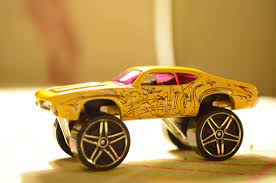
Dmytro Kutniy When I was little, my favorite toy was a small yellow car. I got it for my fifth birthday from my parents. The car was small...
-
Learn the correct pronunciation of all the names of American states with this wonderful Kids TV song by A.J.Jenkins . Sing along! Which...
-
Do you know what are the right names for different hat models? Can you explain what kind of shoes you are looking for? If you are not sure...
-
Тема. Education in Ukraine 1. Warming up. a) Watch the video and write down the subjects that you hear. b) What's your favourite ...


