Thursday, 16 February 2017

Present Perfect Tense

There are some useful links for you to learn about Present Perfect.

1. Read the following information 
Present Perfect / Теперішній доконаний час
and give answers to the questions:

- How do we form the statement, the negative sentence in Present Perfect?
- How do we form different types of questions?
- What are 5 main uses of Present Perfect (вживання)?
- What time expressions are typical for Present Perfect (слова-маркери)?

2. Do the following exercises:
have or has?
statements
negative sentences
questions
special questions
all forms
irregular verbs
practice with the text

3. Take the tests to see how good you are at using Present Perfect:
Level 1
Level 2
Level 3


Tuesday, 7 February 2017

Sapphire Jubilee of Elizabeth II as a British Monarch

Yesterday Queen Elizabeth II marked 65 years on British throne. She became the first British monarch to reign for 65 years. Her Sapphire Jubilee was marked with ceremonial gun salutes at London's Green Park and the Tower of London, and in several other locations across the United Kingdom. The bells at Westminster Abbey in central London were also rung in honor of the occasion. 
A photograph taken by British photographer David Bailey in 2014 has been reissued to celebrate the anniversary. In the photo, the Queen is wearing sapphire jewelry that was given to her as a wedding gift by her father King George VI in 1947.
CNN

Window on Britain. Food.

Watch the video and complete the sentences.


1. The usual British breakfast includes __________________________ .
2. Lunch is at about ____________.
3. At lunchtime people usually only have a break of ________ .
4. Most people buy their food from _______________ .
5. You don’t ___________ convenience food.
6. Most people have their ­­­­­­­­­­­­­­___________ in the evening.
7. People have meat or ________ and __________________ .
8. The evening meal is usually at about ___________ .
9. But people don’t just eat at home – they also _________ .
10. Britain has a lot of foreign ________ .
11. London has restaurants from over ______ different countries.

12. _________ and ___________restaurants are very  popular.

Monday, 30 January 2017

Jazz Chant 5:3 Can you come over?

- Can you come over for dinner tonight?
- I'd like that very much.
- Can you come over for dinner tonight?
- I'd like that very much.
- What time should I come?
- Come around six, if you can.
- Fine.
- Come around six, if you can.
- Fine.

- Can you come over?
- Can you come over for a drink tonight?
- I'd love to.
- I'd love to.
- Can you come over for a drink tonight?
- I'd love to.

- Can you come over for lunch tomorrow?
- I wish I could but I'm afraid I can't.
- Oh, I'm sorry. That's too bad.
- I really wish I could.

Click here to listen and download the Jazz Chant 5:3.

Thursday, 19 January 2017

Jazz Chants - That's a Nice Sweater

Jazz Chants are exercises when students repeat rhythmically words and short phrases to music. Jazz Chant is a rhythmic expression of natural language which links the rhythms of spoken American English to the rhythms of traditional American jazz. 
The technique of jazz chanting was developed by Carolyn Graham during her twenty-five years of teaching ESL in the American Language Institute of New York University. Ms. Graham is the author of numerous Jazz Chants® books, all published by Oxford University Press.
Here's the example of how to improve your speaking skills using  a jazz chant.
Jazz Chant 4-2. Paying and Receiving Compliments.
That's a Nice Sweater


Thursday, 5 January 2017

Irregular Verbs Funny Poem

Read the rhyme and learn it by heart. There are 48 irregular verbs in it.
Пол Наташа sweep-swept-swept (подметать)
Дом в порядке keep-kept-kept (содержать, хранить)
Потому что know-knew-known (знать)
Что когда-то grow-grew-grown (вырастать)
И, конечно, dream-dreamt-dreamt (мечтать)
Выйти замуж без проблем
Я кирпичик throw-threw-thrown (бросать)
Он в окошко fly-flew-flown (летать)
Меня дядя catch-caught-caught (поймать)
К папе с мамой bring-brought-brought (приводить, отводить, приносить)

Monday, 12 December 2016

Motivation is a great force

This short video is not just an advert for an English course, it's an illustration of what great force motivation can be on our way to achieving something. It's especially important in learning foreign languages.

Watch these UK children speak about their reasons to learn a foreign language. They already see its role in their future. What about you?

Why do you learn English? What is your motivation? I'll be delighted to read your comments.

If you need some inspiration for learning a foreign language, here are some stories about famous polyglots including Audrey Hepburn and J.R.R.Tolkien:
The Language Secrets of Prolific Language Learners

My Favourite Toy - Students' Stories

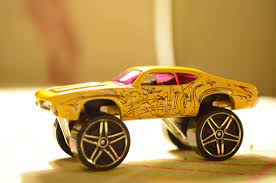
  Dmytro Kutniy When I was little, my favorite toy was a small yellow car. I got it for my fifth birthday from my parents. The car was small...