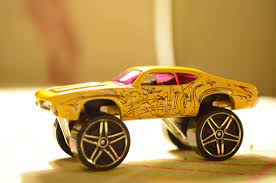
When I was little, my favorite toy was a small yellow car. I got it for my fifth birthday from my parents. The car was small but very bright and beautiful. It had big wheels and shiny windows.
I loved playing with my car. I rolled it on the floor, imagining myself as a racer. I built roads for it out of cubes and chairs. Sometimes I even took it to bed with me.
My car was my best friend. I always told it my secrets and shared my joys and sorrows with it. I remember one time I fell hard and broke my knee. I was very upset, but my car was always there for me and helped me cope with the pain.
I loved my yellow car very much. It was more to me than just a toy. It was my friend and my confidant.
Unfortunately, my car has not survived to the present day. But I still remember it and warmly recall the happy moments we spent together.
My love of cars has remained to this day. I often drive and love to travel. I always dream that one day I will buy myself a yellow car, just like the one I had in my childhood.
Nastia Kochetkova
My favorite toy as a child was not the only one, of course. I have always been very versatile and always changed everything in my life. I played with cars, dolls, soft toys. I played doctor, cook, fireman. I loved toys very much, and I still do to this day. they remind me that even when we grow up and have our own children, work, study, we should not forget about the little us we were. we were all children and each of us is a child. and for me it is a way to relax and cope with emotional state or stress
Dasha Lvova
When I was a child, my favorite toy was a teddy bear named Brownie. I received Brownie as a birthday gift from my grandmother when I turned five. It was a delightful surprise, and the memory of that moment is etched in my mind.
Brownie was a soft, cuddly teddy bear with chocolate-brown fur. It had a tiny, embroidered nose and shiny black eyes that seemed to sparkle with innocence. One of its ears had a small tear, a battle scar from the countless adventures we embarked on together. Despite the tear, that imperfection only added character to my beloved companion.
Whenever I played with Brownie, my imagination knew no bounds. We went on imaginary journeys to distant lands, fought off dragons, and even hosted tea parties for my other toys. Brownie was my confidant, a silent listener to all my childhood secrets. I rarely let my friends or siblings play with it, creating a protective bubble around my cherished friend. One vivid memory involves a rainy day when Brownie and I built a fortress of cushions and blankets. We declared it our secret hideout, safe from the storm outside. It was a magical moment that strengthened my bond with Brownie.
Although the years have passed, I still have Brownie tucked away in a special corner of my room. While the tear has become more pronounced, it only serves as a reminder of the countless memories we created together. Now, I look at Brownie with a mix of nostalgia and fondness. My feelings towards Brownie have evolved with time. As a child, it was a source of comfort and companionship. Today, it represents a cherished piece of my past, a tangible link to the innocence and joy of childhood. While I may not actively play with it anymore, the sentiment attached to Brownie remains evergreen, reminding me of the simplicity and warmth of those early years.
Kateryna Saltanova
My favorite toy when I was a child was a round raccoon that
my godmother gave me for New Year. It was a soft, cuddly creature with big,
bright eyes and a tiny button nose. The raccoon was a perfect size for
snuggling and had soft, velvety fur that felt amazing to touch. I loved its
little ringed tail, which I would often twist and turn as I played.
I remember the day I got the raccoon as if it were
yesterday. My godmother had wrapped it up in a big, shiny box, and I couldn't
wait to see what was inside. When I finally opened the box, my eyes lit up with
excitement. I immediately hugged the raccoon tightly and refused to let go.
I spent countless hours playing with my raccoon. I would
pretend that it was my pet and that we were going on all sorts of adventures
together. We would explore the forest, climb trees, and even go fishing. I
would often talk to my raccoon, telling it all about my day and sharing my
secrets.
Unfortunately, I had to leave my raccoon behind when my
family and I had to evacuate from our home due to the war. It was very difficult to
say goodbye to my favorite toy. I often think about my raccoon and wonder if it
is still sitting on my bed, waiting for me to come home.
Even though I'm older now, my feelings for my raccoon
haven't changed. It's still one of my most cherished possessions and a reminder
of a simpler time.
Навчаючи мови класного вжитку, вчитель може використати кілька стратегій для полегшення навчання:
● Навчайте учнів мови класного вжитку з використанням опор. Почніть із коротких команд, можливо, з одного слова, наприклад, «Сідайте». Тоді вчитель може перейти до більш тривалої команди, наприклад, «Сідайте, будь ласка», і, зрештою, учні можуть вивчити альтернативні фрази, що означають те саме, наприклад, «Займіть свої місця».
● Переконайтесь, що учні знають, для чого призначена ця мова. Не залишайте їх поза навчальним процесом; вони повинні знати, що чим більше вони користуватимуться мовою класного вжитку, тим більше вони розвиватимуться, і що ці фрази покликані допомогти їм використовувати мову максимально природним чином.
● Ознайомивши учнів із поняттями, використовуйте їх! Вживайте їх якомога більше, щоб студенти звикли до них і врешті-решт також змогли використовувати їх.
● Використовуйте наочність, щоб допомогти учням вивчити та запам’ятати фрази класного вжитку.
As I closed my eyes, I imagined myself embarking on a journey to London, England. I decided to travel by plane, and after a few hours of flight, I landed at Heathrow airport. The airport was huge, and it took me some time to navigate my way through it. I was excited to explore the city, so I quickly made my way to the city center.
As I walked through the bustling streets of London, I couldn't help but feel overwhelmed by the sights and sounds around me. The language was not a problem for me since I had been practicing my English for months, but the accents were something that surprised me. The people were friendly and welcoming, and I felt at home in this new place.
For my stay, I decided to book a room at a small hostel near the city center. It was a cozy place with friendly staff and a vibrant atmosphere. I loved the place, and it was a perfect base for my explorations.
There were so many sights to see in London, but I had narrowed down my list to three must-see places. The first place on my list was the Tower of London, where I marveled at the Crown Jewels and learned about the history of the tower. The second place was the British Museum, where I spent hours exploring the vast collection of artifacts from around the world. The third place was the iconic London Eye, where I enjoyed panoramic views of the city.
As my imaginary visit came to an end, I realized how much I had enjoyed exploring London. I had met new people, tried new foods, and learned so much about the city's history and culture. I knew that I would always cherish these memories and that I would definitely visit London again one day.
On the occasion of Equinox which is considered the beginning of spring season in many cultures I want to share some really good songs for young English learners.
Spring is Here - Song with movements
Spring Song - Super Simple Nursery Rhymes For Kids
Spring is Here - from the Movie "Lost in the Woods"
A squirrel, a turtle, baby birds and other forest animals sing about the coming of spring.
Translator's false friends (also called “false cognates”) are words that sound or are spelled similarly in two given languages but actually have different meanings. Here are the most common English-Ukrainian/Russian false friends.
Once I was delivering a presentation at the regional conference and mentioned G Suite for Education. I was instantly corrected by a very self-confident colleague. She was sure "suite" rhymes with "cute". I didn't give her a lecture on the correct pronunciation of this word - she was elder and more experienced than me and I had no intention of embarrassing her. Poor pronunciation is a sensitive issue for many people. Though embarrassment is not the only downside of it. If pronunciation is lacking, listening effectively will also be troublesome. It is also a limit for vocabulary expansion and usage as people avoid words that they find difficult to pronounce.
Here's my advice how to minimize the number of pronunciation mistakes you make if you don't live in English-speaking environment.
1. Don't be too self-confident. Look the word up online if you are not 100% sure about the pronunciation. Use audio dictionary apps. Always check and double-check.
2. Watch English learning YouTube channels such as the BBC Learning English channel which goes in depth on pronunciation in a variety of short helpful clips.
3. Add listening to audiobooks to your learning routine. It may seem difficult at first. Listening is a skill so it needs developing. Start with something familiar and easy, even fairytales for children will do. You are sure to find a book to your taste and level in the series Macmillan Readers where each book has an audio CD.
4. Follow English learning accounts on Instagram which focus on pronunciation.
I highly recommend @learnbritishaccent
5. It's great if your teacher or tutor is careful enough to correct your every single pronunciation mistake even if you make it again and again. For instance, I'm never tired of correcting "museum", "hotel" and "theatre". Yes, I'm a real bore 😄
6. Don't get embarassed when you are corrected at the lesson. This is the way we learn - by making mistakes. It's completely natural. The fact that a student mispronounces a word while speaking means they learnt it while reading - and that is the evidence that you are a well-read person 😉 When corrected, repeat after your teacher, say the word several times and make a mental note of it. #ifIsayrepeatrepeat
Here are the interactive worksheets made up by future primary school teachers, the students of our college. The tasks are for the textbook English, 2 grade by T.Budna.
1. Уважно прочитайте інформацію та зробіть нотатки.
Анотація (від латинського annotatіo – примітка) – коротка характеристика книги, статті, що викладає її зміст і, інколи, дає оцінку, допомагає читачеві орієнтуватися в літературі з того чи іншого питання і полегшує роботу студентів.
Існує кілька видів анотації. Анотації за змістом і призначенням можуть бути довідковими, описовими, реферативними, рекомендаційними і критичними. Зупинимося лише на описових анотаціях, тому що вміння їх писати необхідне студентам у навчальному процесі для обробки друкованої інформації на рідній чи іноземній мові і при оформленні записок до дипломних робіт. Описова анотація містить від 3 до 10 речень (60-100 слів). Анотація, що підсумовує зміст тексту, може бути дуже короткою і складатися з 1-2 речень.
Працюючи над написанням анотації, варто дотримуватися трьох основних вимог:
1. анотація повинна відображати ідею усього тексту, а не окремих його частин;
2. матеріал має бути представленим у безособовій формі і не містити власних думок та вражень;
3. анотація бути стислою версією статті, написаною власними словами.
4. текст анотації повинен мати чітку структуру, де вказується про що йдеться у статті, що саме було досліджено і розглянуто, з яких частин вона складається і кому може бути цікава ця інформація.
Для написання анотації важливо, щоб студенти добре розуміли матеріал, над яким вони працюють, тому варто розглянути етапи роботи над текстом.
1. Перегляньте статтю, прочитайте заголовок, підзаголовки, перший абзац, перше речення кожного абзацу і останній абзац. У разі відсутності підзаголовків, самостійно поділіть текст на абзаци. Спробуйте зрозуміти про що йдеться у тексті і визначити тип тексту. Перекладіть невідомі слова, якщо вони допоможуть зрозуміти головну ідею.
2. Прочитайте статтю, підкресліть важливу інформацію і зробіть помітки.
3. Запишіть ключові факти своїми словами. Знайдіть інформацію, що підтверджує ці ключові факти, але не вдавайтесь у деталі.
4. Стисло викладіть висновки, що зробив автор, одним реченням.
5. Почніть писати анотацію, користуючись власними записами, не заглядаючи в оригінал. Варто зазначити, що анотація не повинна містити речення-висновку.
6. Перечитайте анотацію, переконайтесь, що вона написана власними словами і перевірте помилки.
Для написання анотації використовуються різні кліше (key patterns) для того, щоб полегшити систематизацію інформації і допомогти студенту дотримуватись стилю викладу і правил написання анотації:
1. The article (paper, book, etc.) deals with…
Ця стаття (робота, книга тощо) стосується…
2. As the title implies the article describes…
Згідно з назвою, у статті розглядається…
3. It is specially noted…
Особливо варто відмітити…
4. A mention should be made…
Згадується…
5. Basic information on … is presented.
Надається основна інформація про …
6. The text gives a valuable information on…
Текст надає цінну інформацію щодо …
7. The paper consists of …parts (chapters). The paper contains the following parts: ……
Робота складається з … частин (розділів). Робота складається з наступних частин:…
8. The article is of great help to …
Ця стаття стане у нагоді…
9. The article is of interest to…
Ця стаття становить інтерес для…
10. It (the article) gives a detailed analysis of …, contains the data on…
The traditional American song "The Wheels on the Bus" was written in the 30's by Verna Hills but it is often referred to as a folk song due to the fact that many alternative verses have been created. The song shares the same tune with the nursery rhyme "Here We Go Round the Mulberry Bush".
Read the traditional lyrics and them watch the video and find the differences between the versions.
Traditional Lyrics
The wheels on the bus go round and round, round and round, round and round. The wheels on the bus go round and round, all through the town.
The wipers on the bus go swish, swish, swish; Swish, swish, swish; Swish, swish, swish. The wipers on the bus go Swish, swish, swish, all through the town.
The horn on the bus goes beep, beep, beep; Beep, beep, beep; Beep, beep, beep. The horn on the bus goes beep, beep, beep, all through the town…
The money on the bus goes, clink, clink, clink; Clink, clink, clink; Clink, clink, clink. The money on the bus goes, clink, clink, clink, all through the town.
The Driver on the bus says “Move on back, move on back, move on back;” The Driver on the bus says “Move on back,” all through the town.
The baby on the bus says “Wah, wah, wah; Wah, wah, wah; Wah, wah, wah”. The baby on the bus says “Wah, wah, wah,” all through the town.
The mommy on the bus says “Shush, shush, shush; Shush, shush, shush; Shush, shush, shush.” The mommy on the bus says “Shush, shush, shush,” all through the town.
The version with movements
Here is an example of using "The Wheels on the Bus" for teaching English in primary school. Remember it's essential for pupils to have fun in the process of learning and this song offers a great opportunity to relax and move.
Alternative Versions
(only the first line is given) The doors on the bus go open and shut. The bell on the bus goes ding-ding-ding. The lady on the bus says, “Get off my feet”… The people on the bus say, “We had a nice ride”… “Your name” on the bus says Let Me Off! The Grandma on the bus goes (kiss, kiss, kiss) The Grandpa on the bus goes (snore, snore, snore) Librarians on the bus go shh, shh, shh, Mummy and daddy on the bus says, I love you, Policeman on the bus, goes allo, allo allo, Grannies on the bus, shake their heads, Grannies on the bus knit, knit, knit, Grannies on the bus knit, knit, knit, Dentists on the bus say open wide, Brakes on the bus, go screech, screech, screech, Friends on the bus say, how are you? Teenagers on the bus go like OMG,
Animal Sounds Versions
Dogs on the bus go woof, woof, woof, (or the dog on the bus goes...) Cats on the bus go meow, meow, meow, Mice on the bus go squeak, squeak, squeak, Chickens on the bus go cluck, cluck, cluck, Ducks on the bus go quack, quack, quack, Turkeys on the bus go gobble, gobble, gobble, Parrots on the bus say Who’s a pretty boy? Sheep on the bus go baa, baa, baa, Cows on the bus go moo, moo, moo, Pigs on the bus go oink, oink, oink, Horses on the bus go neigh, neigh, neigh, Cockroaches on the bus go skitter, skitter, skitter,
"London Bridge" is a popular nursery rhyme which is also used to play a fun and easy singing game. You need 5 or 6 children to play it and of course first they must learn the words of the song.
How to play
The words
The rhyme is a fine example of British folklore so there are several versions. Here are the most popular verses:
London Bridge is falling down, Falling down, falling down, London Bridge is falling down, My fair lady.
Build It Up With Sticks and Stones, Sticks and Stones, Sticks and Stones. Build It Up With Sticks and Stones, My Fair Lady.
Sticks and Stones Will All Fall Down, All Fall Down All Fall Down, Sticks and Stones Will All Fall Down, My Fair Lady.
Build It Up With Wood and Clay, Wood and Clay Wood and Clay, Build It Up With Wood and Clay, My Fair Lady.
Wood and Clay Will Wash Away, Wash Away, Wash Away. Wood and Clay Will Wash Away, My Fair Lady.
Build It Up With Iron and Steel, Iron and Steel, Iron and Steel, Build It Up With Iron and Steel, My Fair Lady.
Iron and Steel Will Bend and Bow, Bend and Bow, Bend and Bow, Iron and Steel Will Bend and Bow, My Fair Lady.
Built it up with silver and gold, Silver and gold, silver and gold, Built it up with silver and gold, My fair lady.
Gold and silver I have none, I have none, I have none, Gold and silver I have none, My fair lady.
Build It Up With Bricks of Shaw, Bricks So Sure, Bricks So Sure, Build It Up With Bricks of Shaw, My Fair Lady.
It Will Stand For Ever More, Ever More, Ever More, It Will Stand For Ever More, My Fair Lady.
History
London Bridge was first built by the Romans in 50AD. Throughout the history it was destroyed and rebuilt several times. In fact, it "was falling down" several times and then was rebuilt and made stronger again and again. Originally, London bridge was wooden but in the 13th century stone was used to construct it for the first time. The current crossing opened in 1973 has been built from concrete and steel.
Present Perfect (Теперішній доконаний час) достатньо важко сприймається російськомовними та україномовними учнями, бо в їх рідній мові схожі значення виражаються минулим часом. А тут мова йде про час, що називається Present, тобто теперіщній, а виражає він дію. що вже відбулася, тобто минулу. Дійсно можна заплутатися. Плутанини додає те, що має цей час декілька значень. Тому я вважаю за доцільне тренувати їх окремо.
Сьогодні говоримо про Present Perfect for life experiences, тобто вживання минулого доконаного часу для того, щоб говорити про власний життєвий досвід або життєвий досвід іншої особи. В цьому випадку не є важливим коли відбулася дія (не вказується дата чи час), фокус на самій дії. Дія відбулася в минулому і вже завершена. Example:
- Have you ever been abroad?
- I have been to Hungary.
Time Expressions: ever, never, recently, lately.
Звертаю увагу на те, що у випадку продовження розмови про конкретний життєвий досвід. далі вживається минулий простий час (Past Simple Tense). Example:
- Have you ever been abroad?
- I have been to Hungary.
- When did you go there?
- I went to Budapest in summer 2013.
- Was it a business trip?
- No, it wasn't. I went with my friends. We went sightseeng around the city centre first and had a boat trip down the Danube in the evening.
- Sounds great!
2. Do Activity 1 and Activity 2 in the following worksheet. Activity 3 is optional.
The system of education in Ukraine has undergone major changes in the recent years. And they are not just about the New Ukrainian School. The system of post-secondary and post-graduate education has also changed. Now there is pre-higher professional education provided by professional colleges and vocational education provided by vocational technical schools. The scientific degree previously called the Candidate of Science degree is now referred to as the Doctor of Philosophy or Doctor of Arts. The highest scientific degree is the Doctor of Sciences whichis a second research degree acquired by a person at the research level of higher education on the basis of Doctor of Philosophy degree.
Practise the vocabulary on the topic "Education in Ukraine" (the interactive worksheet by Natalia Belova, the student of Pokrovsk Professional Pedagogical College).
Сьогодні шотландці та просто поціновувачі шотландської культури по всьому світу святкують так звану "Ніч Бернса" (Burns Night) з нагоди дня народження Роберта Бернса (народився 25 січня 1759 року). Пропоную на честь цієї події познайомитися ближче зі всесвітньо відомими творами великого шотландського барда в оригіналі.
Читання поезій Роберта Бернса має свої нюанси. Основною трудністю є розуміння шотландської рівнинної мови (Scots), яка є результатом розвитку місцевого діалекту староанглійської мови. Ця мова вживається як розмовна мова в сільській місцевості рівнинної частини Шотландії та невеликих містах. Слід розрізняти шотландську рівнинну мову, яка належить до групи германських мов, та шотландську гельську (Scottish Gaelic), мову кельтського походження.
Періодом розквіту шотландської рівнинної мови було Середньовіччя, коли вона вживалася як мова шотландського королівського двору та поезії. Але починаючи з 16 століття використання її як літературної мови йде на спад. Поети Алан Ремзі та Роберт Фергюсон намагалися відродити традицію використання Scots у якості літературної мови, Роберт Бернс продовжив їхню справу.
Шотландська рівнинна мова має багато спільних слів з англійською, але існують і певні відмінності. Наприклад, там де англійці кажуть "Yes, I know", носії Scots вживають "Aye, I ken". Специфічні для шотландської рівнинної мови слова можна перекласти англійською за допомогою безкоштовного онлайн словника Dictionary of the Scots Language
Пропоную спробувати прочитати одну з поезій Р.Бернса, що стала відомою піснею про кохання - "Ae Fond Kiss". Це приклад "відшліфованої" шотландської рівнинної мови. Бернс використовує шотландську вимову багатьох слів - ‘Ae’ замість ‘A’, ‘nae’ замість ‘no’ та ‘sae’ замість ‘so’, також ‘weel’ замість ‘well’. Специфічна шотландська лексика обмежується одним словом - ‘ilka’ замість ‘each’ або ‘every’. Також тут можна спостерігати вживання архаїчних форм англійських займенників другої особи однини - 'thou' (ти), thee (тебе), thyne (твій).
AE FOND KISS
Ae fond kiss and then we sever Ae fareweel, alas for ever Deep in heart-wrung tears I'll pledge thee Warring sighs and groans I'll wage thee
Who shall say that fortune grieves him While the star of hope she leaves him Me, nae cheerful twinkle lights me Dark despair around benights me
I'll ne'er blame my partial fancy Nothing can resist my Nancy For to see her was to love her Love but her, and love for ever
Had we never loved sae kindly Had we never loved sae blindly Nor never met, nor never parted We would never have been so broken-hearted
Fare thee weel, my first and fairest Fare thee weel, my best and dearest Thine be like joy and treasure... Peace, Enjoyment, Love and Pleasure
Mmm, ae fond kiss, and then we sever Ae fareweel alas, for ever Deep in heart-wrung tears I'll pledge thee Warring sighs and groans I'll wage thee
Пісня була написана у 1791 році та відправлена у листі до Mrs. Agnes McLehose, з якою у поета був бурхливий роман, що завершився у зв'язку з від'їздом жінки далеко за межі Британії. Вірш проникнутий смутком розбитого серця.
Розуміння поезії полегшує її сприйняття на слух, тому пропоную вашій увазі посилання на пісню

.jpg)